Tasting Beer Like the Pros
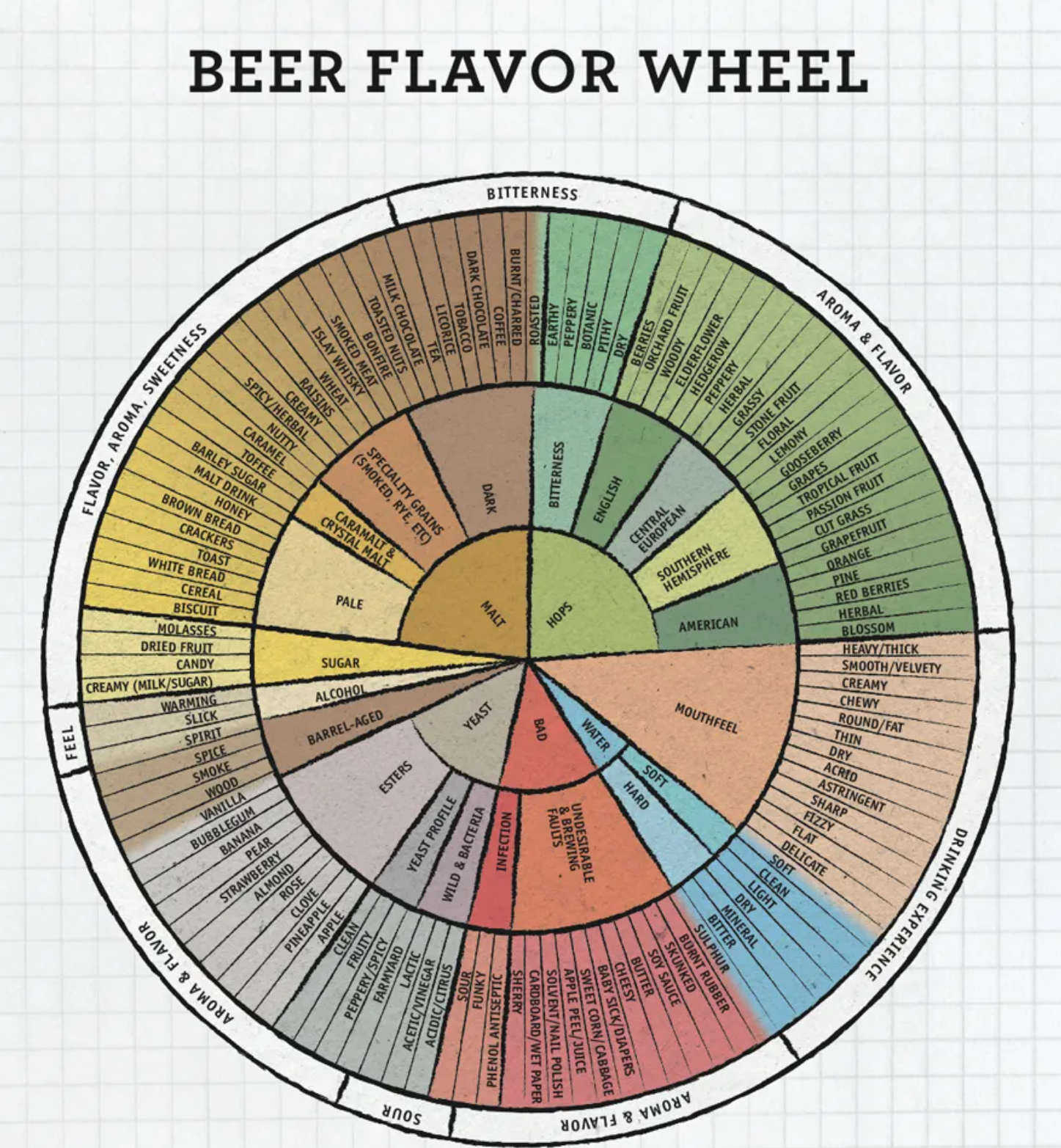
Brewers don’t just taste beer for pleasure. They taste it with purpose.
At the brewery level, sensory analysis—the scientific process of putting beer in front of trained tasters—is one of the most important quality-control tools we have. It helps ensure that every beer leaving the brewery is consistent, true to brand, and free of flaws.
Sometimes, we’re tasting for typicity.
Does this batch taste like previous batches of the same beer? Does it accurately represent the intended style?
Other times, we’re tasting for the presence or absence of specific compounds.
These are essential practices for breweries. They protect quality and consistency.
But they’re not especially useful for you, the beer drinker.
What Is Descriptive Sensory?
What is useful is something called descriptive sensory analysis.
This is the practice of translating what we perceive into clear, specific language. Not just identifying flavors, but defining them with precision.
Breweries use descriptive sensory to create tasting notes and differentiate products, especially in a market where a single brewery may produce dozens of beers within the same style each year. The difference between beers often comes down to how well those nuances are understood and communicated.
“Citrus” isn’t enough.
Is it Meyer lemon? Ruby red grapefruit peel? Fresh-squeezed, high-pulp tangerine juice?
Consider a brewery that releases 20 different hazy IPAs over the course of a year. At the broadest level, each of those beers might be described as offering “tropical fruit and cannabis.” But that kind of shorthand is not very useful in a taproom when three or four of these beers might be pouring at a given time.
This is where good descriptive sensory analysis comes in handy.
“Tropical fruit” isn’t an endpoint; it establishes our spectrum. Are we talking mango, papaya, or passionfruit? And even within each of those, there’s a range. Is it crunchy, just-ripe mango or something softer and sweeter, like mango lassi? Is the papaya fresh and vibrant, slightly underripe, or fully soft and a bit cheesy? Does the passionfruit lean floral, like passionflower, or toward something richer and more saturated, like POG juice?
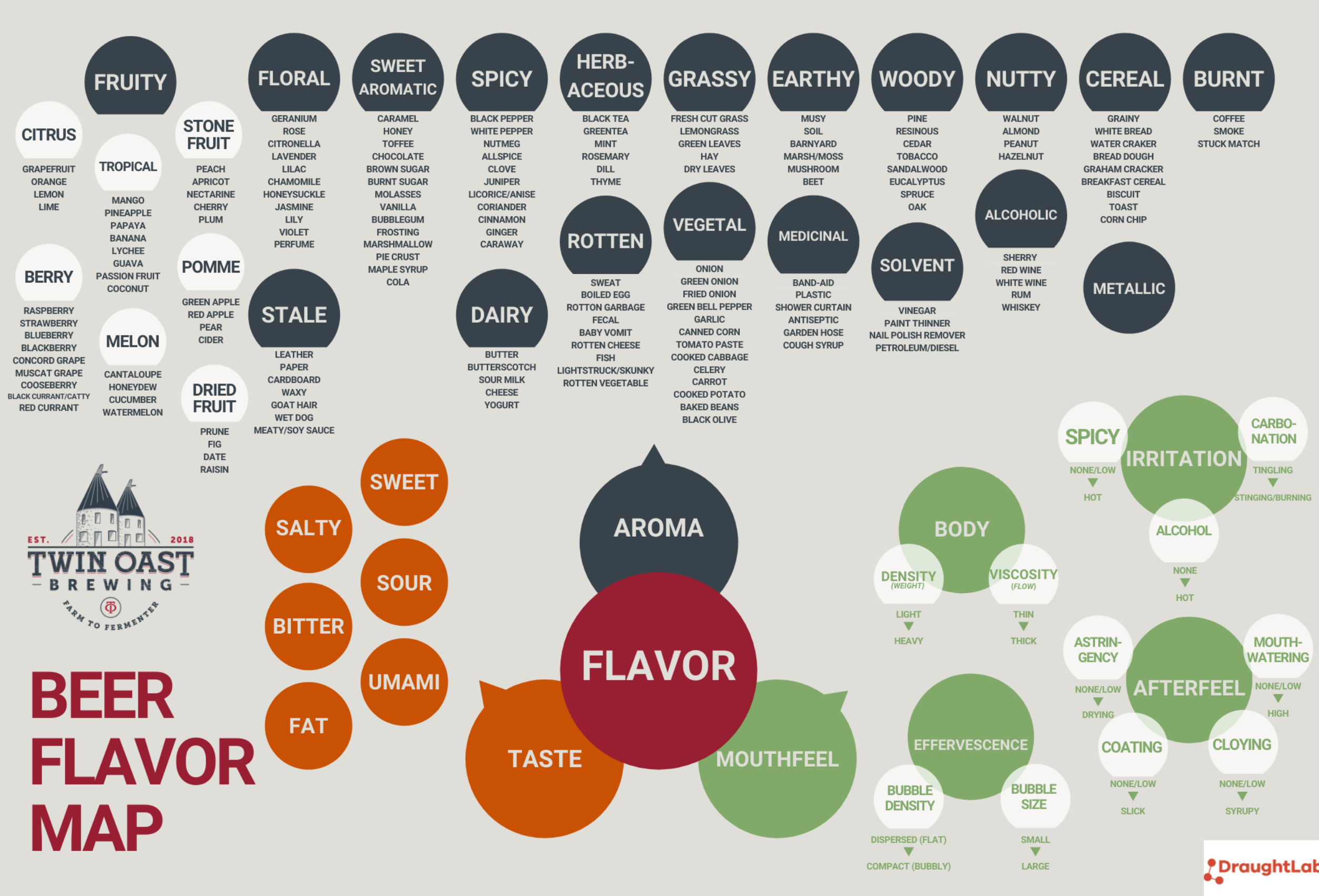
The same principle applies across flavor categories. “Chocolate” can mean a lot of things. It might read as a waxy, one-note, nostalgic sweetness like a Tootsie Roll, or something deeply complex like a single-origin dark chocolate bar, or even more intensely bitter, like a dark chocolate–covered espresso bean.
The point is precision.
The more clearly we define what we’re tasting, the more useful that information becomes, especially when it comes to pairing beer with food.
From Description to Application: Beer & Food Pairing
Applied descriptive sensory analysis allows us to break a beer down into its component parts and use those insights intentionally.
Sometimes, that means finding matches. Gently caramelized malt flavors can mirror the browned skin of a rotisserie chicken, while darker caramel and roasted notes can complement the hard sear of a steak.
Other times, it’s about harmonies. The clove character of a Bavarian-style Weizen can align with the warming spices in a traditional sausage. Ripe pineapple or guava notes in a hazy pale ale can both soften the heat and lift the fruityness of a chili pepper in a more piquant sausage.
In each case, the pairing works because the beer has been clearly understood.
How to Start Practicing
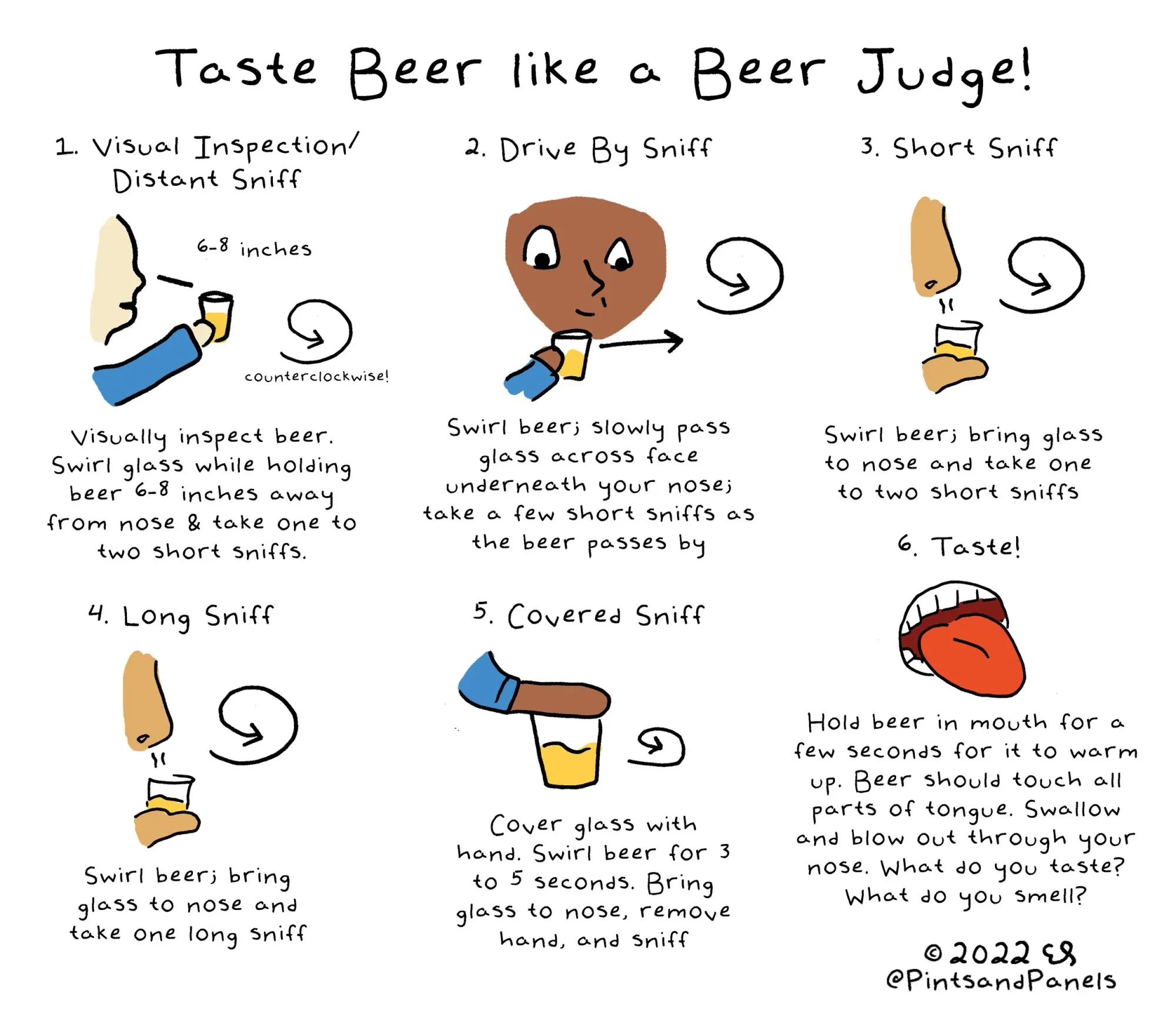
You don’t need a lab or a trained panel to start building this skill. Start by making brief tasting notes on every beer you try. Write down everything you smell and taste. Not just what, but how much—is it subtle, strong, bold, or overwhelming?
When you’re writing notes, challenge yourself to be specific. Avoid vague descriptors like “dank,” “sweet,” or “fruity.” Push further. What kind of sweetness? What kind of fruit? Does it smell like a dorm room in the 1970s or a modern high-end dispensary?
Do this consistently and over time, patterns will emerge. Using an app like Untappd can help you build that habit and keep a record of your observations.
Even better, taste with others. Get a small group of beer-loving friends together and build a simple flight of similar beers. The goal isn’t just to identify what you like; it’s to understand how they differ.
For example, have each participant bring a favorite porter or stout, then taste them side by side and try to arrange them along a spectrum from milk-chocolate to dark-chocolate character.
That’s how this skill develops. Not through memorization, but through attention, presence, repetition, and conversation.
Your Palate Is Better Than You Think
And it’s worth remembering: this isn’t a new skill you’re learning. It’s one you already have and are tapping into more deeply.
Every time you smell or taste something and react to it, positively or negatively, your senses are working in concert with your memory. When you walk into a home where cookies are baking, and your mouth starts to water, that’s your brain recognizing the aroma and connecting it to every great cookie you’ve had before.
Descriptive sensory simply asks you to slow down that process.
Instead of just thinking, "those cookies smell good, I can’t wait to try them," you start to ask why. I’m getting chocolate, butter, and sugar. Is there vanilla? Nuts? Maybe a salted caramel? Is this familiar? Perhaps a recipe I recognize?
The same applies to beer.
The goal isn’t to have a “better” palate. It’s to become more aware of what you’re already working with and more precise in how you talk about what you smell and taste.
Because once you can do that, everything opens up: how you taste, how you talk about beer, and how you connect it to the world around you.
🍻 Upcoming Events Featuring Our Member Breweries
🎉 Public Events This Week!
Thursday, 3/26—Hinterhaus Tasting & Pairing Dinner at Admiral Maltings
(Alameda, CA| 5:30-8:30 PM)
Meet the distillers and enjoy a three-course pairing dinner alongside a vertical tasting of six whiskeys. Malt house tour at 5:30, and dinner at 6:30.
Tickets & More Info –> Whiskey Dinner In Alameda!
Thursday, 3/26—Immersive Album Release Premiere at Shapeshifters Brewery & Cinema
(Oakland, CA| 7 PM)
Girl Swallows Nightingale (GSN) is the mythic art-pop universe created by Oakland artist Marica Petrey, offering a fully immersive experience — cinematic screening, live music, dance, and theatrical performance.
Get Your Tickets & More Info –> Girl Swallows Nightingale album release experience
Sunday, 3/29—2nd Annual Chili Cook-Off at Pond Farm Brewing
(San Rafael, CA| 1 PM)
Girl Swallows Nightingale (GSN) is the mythic art-pop universe created by Oakland artist Marica Petrey, offering a fully immersive experience — cinematic screening, live music, dance, and theatrical performance.
More Info –> Delicious Chili in San Rafael
📅 Save the Dates
Wednesday, 4/8—Pitch-A-Friend at Del Cielo
(Martinez, CA| 6:30-8:30 PM)
Got a single friend who deserves the spotlight? Pitch-A-Friend is the fun, slightly chaotic mingle experience taking the dating world by storm — where friends give short, hilarious presentations pitching why their single friend is a catch!
More Info –> Pitch-A-Friend In Martinez!