Never Judge a Book by its Cover, or a Beer by its Color
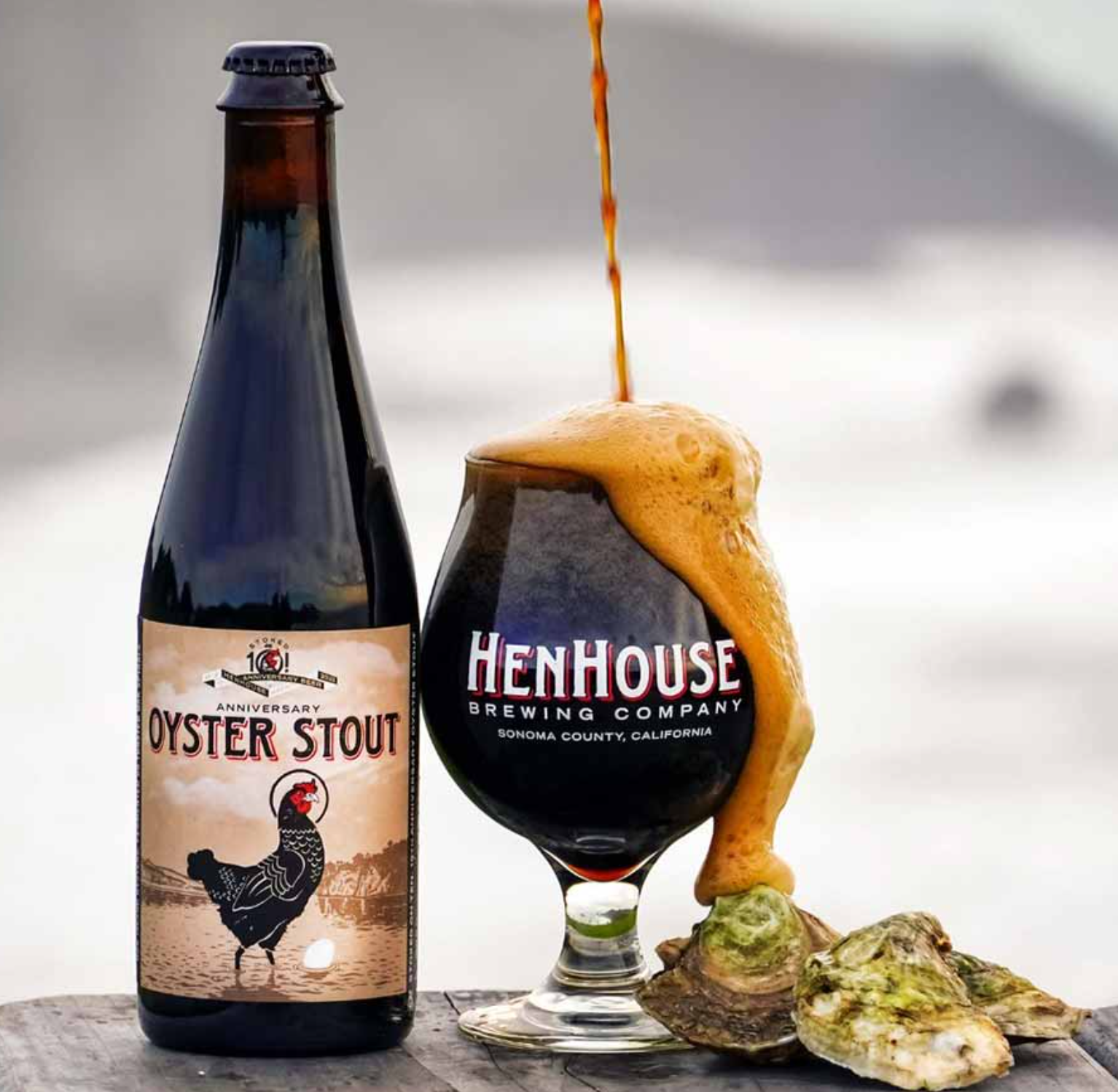
The Brew Deck is back from our holiday hiatus, and with Beer Week approaching and clouds in our current forecasts, we figured now was a great time to dig into dark beer. The culinary world is fond of reminding us that we “eat with our eyes,” and the same is true when it comes to drinking beer. The way a beer presents in the glass creates expectations about its flavor, aroma, and impact; expectations that a brewer might endeavor to fulfill or subvert.
How Dark Beers Differ
Brewers use a numeric code called the “Standard Reference Method” (SRM) to categorize and differentiate beers and beer styles by color. The darker the color, the higher the number. For example, Coors Light has an SRM of 2, whereas Guinness Draught has an SRM of 45.
The ingredient that determines a beer’s color is malt. Malt can be treated in a wide variety of ways; it may be very gently dried using indirect heat to avoid imparting much color. It can be toasted to a desired degree or roasted to a very dark color.
When it comes to the color of the beer in your glass, the darker malts play an outsized role. A helpful comparison is a painter’s palette. Adding a small amount of black paint to a lighter color dramatically darkens the whole mixture. Beer behaves in much the same way. Even a small percentage of very dark malt can result in a beer with a high SRM.
This is why color alone is often a poor predictor of beer’s flavor, aroma, or intensity.

Porter and Stout
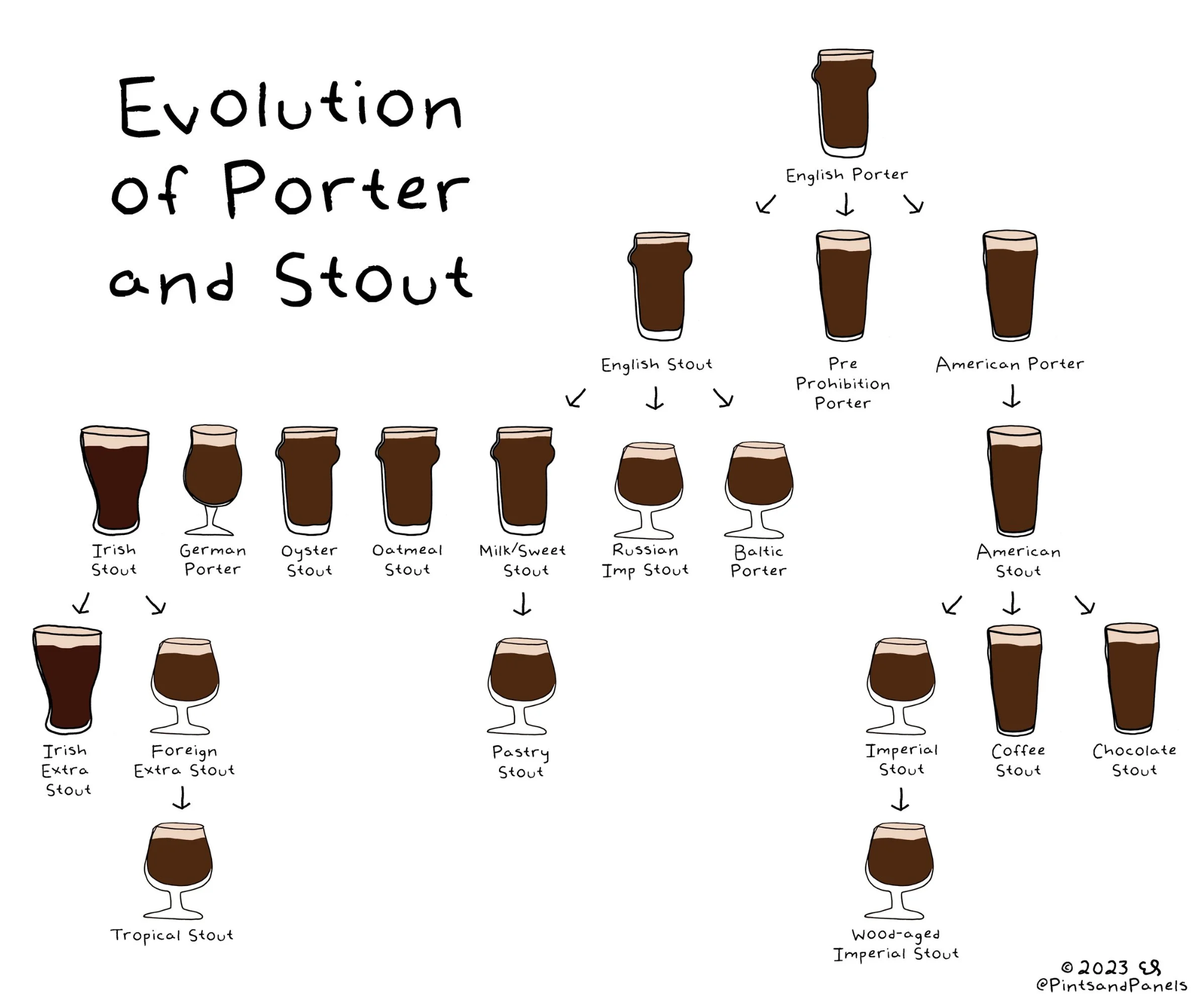
Two of the most familiar dark beer styles are porter and stout, and their history helps clarify how color and flavor diverge. These two styles are very closely related, having both originated in breweries around London. Porter came first in the 1600s. Stout arrived in the early 19th century, made possible by a new technology that allowed maltsters to produce very dark malt without burning it.
Soon after "black patent malt" was introduced, brewers began making “porters” that were almost entirely composed of pale base malt and relied on small additions of this new ingredient to make the beer dark and add the requisite flavor intensity.
Naturally, these “porters” tasted quite different from their predecessors, which achieved their color through large additions of various paler brown and chocolate malts. Brewers and beer-drinkers took note of the difference and began calling these newer porters, “stout porter,” and eventually, just "stout."
How That Difference Shows Up Today
That distinction still tends to hold.
When a brewery offers both a porter and a stout, the porter usually relies less on black patent malt or unmalted roasted barley, where the stout typically leans further into particularly dark roasted grain flavor.
In practical terms, a porter may evoke something closer to a milk chocolate bar, while a stout is more likely to recall a high-cacao dark chocolate, firmer, drier, and more bitter.
De-bittered Dark Beers
Other dark beer styles push this idea even further.
American black IPAs, Saxon schwarzbiers, and Czech tmavé lagers can all be visually mistaken for stouts. However, each of these styles will display even less roast character than a porter. That is because, like stout, these styles are characterized by the use of their own special category of malt. "De-bittered" malts are dark malts with their husks removed. These grains can have a profound effect on a beer’s color and a much subtler effect on flavor or aroma.
The Bottom Line
Because we cannot help but "drink with our eyes," dark beer will always arrive in the glass carrying a set of expectations. Sometimes those expectations will be met; other times they will be deliberately subverted.
Knowing that beer color is a function of the malt a brewer selects, not a reliable indicator of flavor, aroma strength, or body, allows us to approach dark beers with curiosity rather than assumption. You may already know whether American imperial stouts are your thing, but that doesn’t mean you’ll feel the same about a 10° tmavé pivo.
Either way, understanding what beer color does, and does not, mean when in relation to flavor can turn a reflexive reaction into an opportunity for a rewarding discovery.
🍻 Upcoming Events Featuring Our Member Breweries
🎉 Free (Pay-As-You-Go) Public Events This Weekend!
Friday, 1/9— Next Stop Comedy at Alameda Brewing
(Alameda, CA| 7 PM - 9 PM )
Next Stop Comedy guarantees big laughs, great vibes, and an experience you won’t want to miss. Alameda Brewing guarantees tasty beer!
MORE INFO –> Comedy Night In Alameda!
📅 Save the Dates
Wednesday, 1/25—Burns Supper at Steel Bonnet Brewing
(Scotts Valley, CA| 4 PM - sold out!)
Steel Bonnet's annual Burns Supper Celebration features live Celtic music by Peter Daldry from 5-7pm and traditional Celtic fare brought to you by Celtic Tea Shoppe. Celebrate the life & works Robert Burns with good beer and Celtic cheer!
MORE INFO –> Burns Supper In Scotts Valley!
Friday 2/20/2026 - Sunday 3/1/2026 — Beer Week 2026
(The Whole Damn Bay Area!)
The biggest and best regional celebration of independent craft beer on the planet!
Keep up-to-date on all the events at sfbeerweek.org
Saturday 2/21/2026— SF Beer Week Fest 2026 at Salesforce Park
Tickets on sale now! Early Bird pricing ends 12/31/2025!
More Info –> SF Beer Week Fest 2026!